
Regulatory & Sector-specific
Admiralty and Maritime Law
Advice on maritime claims and ship arrest, carriage of goods by sea, charterparties and marine insurance.
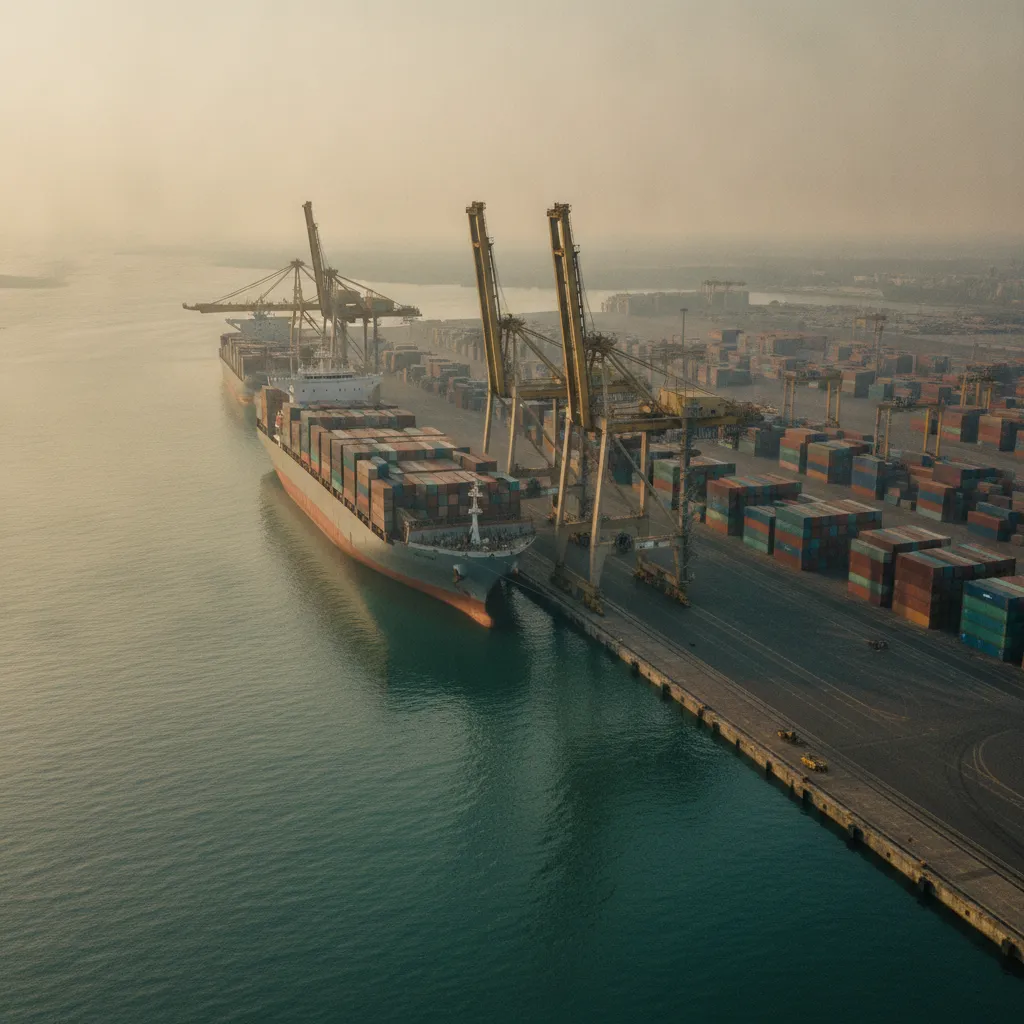
Maritime disputes have their own law, their own remedies and their own jurisdictional rules, the most powerful of which is the arrest of a ship to secure a claim. The firm advises on maritime claims and ship arrest, on the carriage of goods by sea, and on charterparty, cargo and marine-insurance disputes, working with the framework introduced by the Admiralty (Jurisdiction and Settlement of Maritime Claims) Act, 2017.
These matters move quickly and on documents, the bill of lading, the charterparty, the survey and the casualty papers. The firm prepares them on that record and acts with the urgency that ship arrest and release demand.

Maritime claims and ship arrest
The Admiralty Act, 2017 consolidated the admiralty jurisdiction of the High Courts and set out the maritime claims for which a vessel can be arrested as security, from unpaid dues and damage to cargo and bunker claims. Arrest, and the prompt furnishing of security to release a vessel, is often the decisive step, and the firm advises on obtaining and on resisting it.
Carriage, cargo and charterparties
Disputes over the carriage of goods by sea turn on the bill of lading and the charterparty and on the allocation of risk between owner, charterer and cargo interests. The firm advises on these contracts and on claims for cargo loss or damage, freight and demurrage, read against the documents and the applicable carriage regime.
Jurisdiction and enforcement
Because maritime matters often cross borders, the right forum, the law of the contract and the enforcement of any award or judgment all need early attention. The firm advises on jurisdiction and on enforcing maritime claims and security in India.
The legal framework
The principal statutes and the provisions that most often decide these matters. Statute text can be read in the firm's Legal Library; always check the current version at the official source.
Admiralty (Jurisdiction and Settlement of Maritime Claims) Act, 2017 · Act 22 of 2017
- Maritime claims — the admiralty jurisdiction of the High Courts and the claims for which a vessel may be arrested.
Merchant Shipping Act, 1958 · Carriage of Goods by Sea Act, 1925
- Merchant Shipping Act — registration, safety and the regulation of Indian shipping.
- Carriage of Goods by Sea Act — the rights and liabilities of carriers under bills of lading.
Marine Insurance Act, 1963
- Marine cover — the dedicated regime for insuring ships and cargo.
Key judgments
Grouped by issue. Each case is cited from the court's own record; open a heading to read it.
Admiralty jurisdiction & ship arrest 1
M.V. Elisabeth v. Harwan Investment and Trading Supreme Court
1993 Supp (2) SCC 433
Held that the High Courts have inherent and plenary admiralty jurisdiction over maritime claims, including the power to arrest a vessel, not confined by the old colonial statutes. The decision shaped Indian admiralty practice and was later given statutory form by the Admiralty Act, 2017.
How we work on these matters
The firm acts with the urgency that ship arrest and release demand, where timing is often decisive.
Maritime matters are prepared on the documents, the bill of lading, the charterparty and the survey, rather than on assertion.
Advice on jurisdiction, security and enforcement is given early, because in cross-border matters those choices shape the outcome.
Frequently asked questions
Can a ship be arrested to secure my claim?
Yes, where the claim is a maritime claim recognised by the Admiralty Act, 2017, a vessel can be arrested by the High Court as security. Arrest is a powerful remedy and is also frequently met by the prompt furnishing of security to release the ship, so both sides need to act quickly.
Who is liable for cargo lost or damaged at sea?
It depends on the bill of lading, the charterparty and the applicable carriage regime, which allocate risk between the carrier, the charterer and the cargo interests. The firm reviews those documents to advise on liability and on a claim.
Which court hears an admiralty matter?
Admiralty jurisdiction is exercised by the High Courts under the 2017 Act. Because maritime disputes often involve foreign parties and assets, the choice of forum and the enforcement of any security or award need early attention, on which the firm advises.
This note is general information on the law as at Jun 2026, not legal advice on any specific matter. The law changes; for advice on your facts, please speak to the firm.
Tell us about your matter.
Share the facts and we will tell you, candidly, where you stand and how we can help.